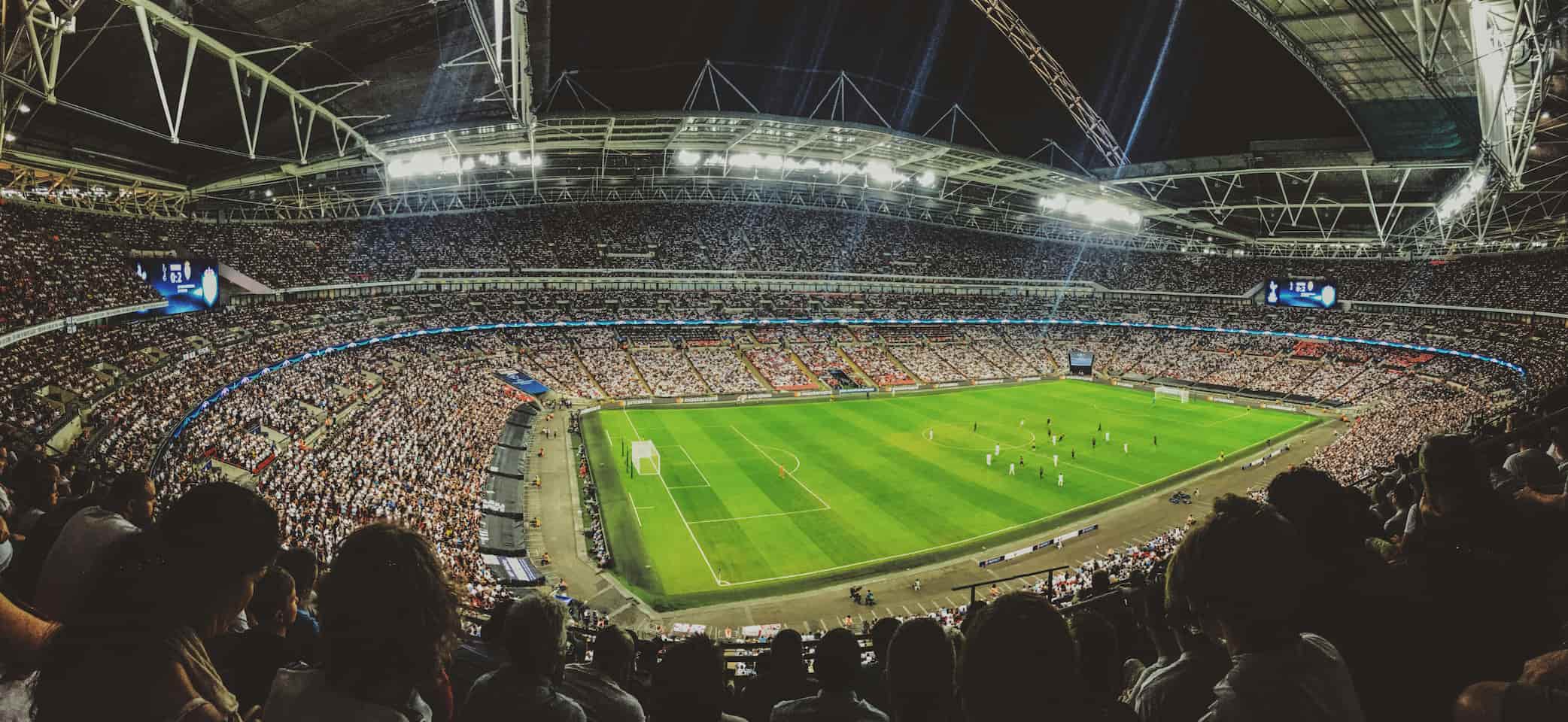
When a football club loses its way, it is rarely the boardroom that saves it.
More often than not, it is the people in the stands.
What follows is a look at clubs that survived collapse, or were created from scratch, because their supporters decided that watching their colours disappear was simply not an option.
Some of these stories involve fan-owned institutions that have existed for generations. Others began as acts of outright defiance. A few started with nothing more than determination and a willingness to fight.
Borussia Dortmund: Open to Shareholders, Including You
Germany's 50+1 rule was designed with a clear purpose: to ensure that football clubs remain accountable to their members rather than to private investors. Under the rule, the parent club must retain at least 50 percent of voting rights plus one additional vote in any company operating the team.
There are exceptions, RB Leipzig being the most prominent, but the majority of Bundesliga clubs continue to operate under member-led structures. Borussia Dortmund, eight-time German champions, sits within that group while also being publicly traded on the stock exchange, meaning anyone, regardless of nationality, can purchase shares in the club.
Those shares do not confer meaningful control over day-to-day operations. Their significance is partly financial, functioning like any other stock, and partly symbolic, allowing supporters to hold a stake in an institution they care about.
Shares in clubs like Manchester United, Arsenal, and Juventus are also available to outside buyers, though the voting arithmetic in those cases means that even collective fan ownership would fall well short of genuine influence.
Union Berlin: Built by Hand, Kept Alive by Blood
Union Berlin is officially a members' club, governed by more than 40,000 registered members who elect the board and determine the club's direction. That structure tells part of the story. The rest is told by what those members actually did when the club needed them most.
In the late 2000s, the Stadion An der Alten Forsterei had fallen into serious disrepair. The club lacked the funds to restore it. Rather than accept the situation, thousands of supporters arrived with tools, donated their annual leave, and physically rebuilt the ground themselves. The total volunteer contribution exceeded 140,000 hours of labour.
When the club later teetered on the edge of bankruptcy, the fanbase launched the "Bleed for Union" campaign, donating blood plasma and directing the compensation payments to the club's accounts. It kept Union alive.
The club eventually reached the Bundesliga and, subsequently, the Champions League group stage, an achievement that would have seemed implausible during those years of crisis. None of it was accidental. It was the direct product of a fanbase that understood ownership as something requiring active participation rather than passive support.
Boca Juniors and Argentine Football's Non-Profit Model
Argentina operates one of the most distinctive ownership structures in world football. By law, the overwhelming majority of professional clubs must function as nonprofit civil associations, known locally as Asociaciones Civiles Sin Fines de Lucro.
The practical consequence is significant. Clubs like Boca Juniors, River Plate, Racing Club, and Independiente are structured as community institutions. Members pay fees, elect presidents, approve budgets, and determine the club's strategic direction. No individual or corporation can acquire a controlling stake or extract profit from the club itself.
Even the most commercially powerful clubs in Argentine football are legally protected from the kind of private takeover that has reshaped the game elsewhere.
Brazil's Member-Owned Clubs
Member ownership has deep roots in Brazilian football, and many of the country's most celebrated clubs continue to operate under that model. Flamengo, Santos, and Palmeiras are all structured as community-based institutions in which elected presidents answer to their membership rather than to private shareholders.
Since 1993, however, Brazilian law has permitted an alternative through the Sociedade Anonima do Futebol model, which allows for privately owned sports clubs. Cruzeiro provided one of the most visible examples of this shift in the early 2020s, when legendary former striker Ronaldo acquired the club and took it through a period of significant structural change.
Real Madrid, Barcelona, Athletic Bilbao, and Osasuna: La Liga's Socio Clubs
Spanish football moved broadly toward corporate ownership structures following legislation that required most professional clubs to convert into public limited sports companies. Four clubs in La Liga's top two tiers refused to follow that path and remain governed by their members.
Barcelona's membership stands at more than 143,000 socios, who elect the club's president and vote on major decisions affecting the institution. Real Madrid operates on the same basis, with Florentino Perez, like all club presidents before him, ultimately answerable to the membership.
Athletic Bilbao maintains its member-run model alongside its famous commitment to fielding only players from the Basque region, though that restriction applies to the squad rather than the membership itself. Osasuna, also from the Basque Country, operates democratically but without any restriction on player origins.
Below the top two divisions, a grassroots movement known as futbol popular has been quietly growing since 2007, with nineteen fan-run clubs now operating across Spain in deliberate opposition to the commercial direction of the professional game.
Motherwell F.C.: Sold for One Pound
In 2016, Motherwell faced a situation with uncomfortable parallels to Gretna's collapse years earlier. Both clubs had owners who were diagnosed with serious illness. Where Gretna's owner stepped away and the club disintegrated, Motherwell's majority shareholder took a different approach.
Les Hutchison, who held 76 percent of the club, transferred his shares to the Well Society, the club's supporters' trust, for a single pound. The transaction was not symbolic. It was a deliberate act of structural change, designed to secure the club's long-term future by placing it in the hands of the people most invested in its survival.
Overnight, Motherwell became the first top-flight club in the United Kingdom to move into majority fan ownership. The Well Society now holds full voting control and carries direct responsibility for the club's direction.
Bury AFC: Rebuilt from Nothing
The original Bury FC had existed for 134 years when it was expelled from the English Football League in 2019 following years of financial chaos and mismanagement. The club did not just go into administration. It was erased.
Supporters refused to accept that as the final word. They organised, raised funds, and began the process of rebuilding from the ground up, eventually reacquiring Gigg Lane, one of the oldest football grounds still standing in England.
That effort produced a phoenix club, Bury AFC, run entirely by its supporters in its early years. A subsequent push for consolidation within the local football community eventually led to the revamped Bury FC returning to competitive action.
Today, the Football Supporters' Society of Bury Limited holds majority ownership, controlling 50 percent plus one of the club's shares.
FC United of Manchester: Built in Protest
FC United of Manchester was founded in 2005 as a direct response to the Glazer family's leveraged takeover of Manchester United. A section of the supporter base concluded that the new ownership structure, built on debt and driven by commercial priorities, was incompatible with the club they had grown up supporting.
Unable to prevent the takeover, they did the next best thing. They built something of their own.
FC United was established as a community club, fan-owned from the outset, with every member entitled to a vote and no provision for any single investor to take control. The intention was never to replace Manchester United but to provide an alternative rooted in the values that many felt had been abandoned at Old Trafford.
What began as an act of protest has since become one of the more enduring and respected fan-led projects in English football.
AFC Wimbledon: Refusal to Relocate
AFC Wimbledon was created in 2002 in response to one of the most controversial decisions in English football history.
When the Football Association approved the relocation of Wimbledon FC to Milton Keynes, nearly 100 kilometres from the club's traditional home, a substantial portion of the fanbase reached the same conclusion: a club that had moved that far was no longer their club.
Rather than follow it, they started again. AFC Wimbledon was founded, owned, and operated by the supporters who could not reconcile themselves to what had happened.
It has been a fan-run institution from its first day and remains so.
CS Lebowski: From Joke to Serious Club
The origins of CS Lebowski are genuinely unusual. A group of students from Florence, having grown disillusioned with Fiorentina, began following a local amateur side called AC Lebowski, named after the cult 1990s film.
The team was, by all available evidence, spectacularly bad, conceding 99 goals across a single season.
When the original club collapsed, the supporters around it refused to disappear with it. In 2010, they founded Centro Storico Lebowski as a properly constituted club, and the project evolved from its ironic beginnings into something genuine.
Over the following decade, the club climbed three levels of the Italian football pyramid on a limited budget. In 2021, they signed former Fiorentina midfielder Borja Valero, a moment that illustrated just how seriously the whole enterprise had come to be taken.
Honourable Mention: MyFootballClub's Experiment
MyFootballClub launched in 2007 with a genuinely ambitious concept: recruit 50,000 members from anywhere in the world, pool their contributions, and collectively own and manage a real football club.
A year later, the project acquired a 75 percent stake in Ebbsfleet United, and for a brief period it functioned more or less as intended.
Members voted on transfers, budgets, and even tactical decisions. The club won the FA Trophy in 2008. For a moment, it looked like something new and workable had been created.
Participation dropped steadily. Members stopped voting, stopped paying their subscriptions, and the online community that had driven the project fragmented. By 2013, MyFootballClub had sold its shares and wound up the experiment.
The idea was ahead of its time, or perhaps simply ahead of the infrastructure needed to sustain it. Either way, the attempt was genuine, and the ambition behind it was real.
What These Clubs Have in Common
The clubs gathered here vary enormously in size, geography, and the circumstances that produced them.
What they share is the conviction, demonstrated through action rather than sentiment, that football clubs are not simply commercial assets to be bought and sold but community institutions that belong to the people who care about them most.
Boardrooms come and go. Owners change. The people in the stands, the ones who rebuild stadiums with their own hands and donate blood to keep the accounts solvent, tend to stay.
That, in the end, is where football's continuity actually lives.